


T400 vs Spandex: Why Outdoor Brands Choose T400 for UV & Chlorine Proof Apparel
2026-11-05
Outdoor apparel endures intense sunlight, chlorinated pools, perspiration, and repeated laundering. For decades, spandex has been the default stretch solution in performance fabrics. Yet a growing number of outdoor brands now replace spandex with T400, a bicomponent polyester fiber that provides durable elasticity without spandex's known weaknesses. This article compares T400 and spandex in UV resistance, chlorine resistance, and long-term durability, and explains why T400 is becoming the preferred material for UV-resistant, chlorine-proof apparel.
Understanding T400 and Spandex: Two Different Stretch Technologies
Spandex, also known as elastane, is a synthetic fiber built from polyurethane. It can stretch up to five times its length and is usually covered with polyester or nylon yarns in woven textiles. Its elasticity comes from long polymer chains that uncoil under tension. While effective in the short term, spandex is sensitive to heat, light, and chemicals, which limits its performance in demanding outdoor environments.
T400, in contrast, is a bicomponent fiber manufactured by combining PET, or polyethylene terephthalate, and PBT, or polybutylene terephthalate, in a single filament. Because the two polymers shrink at different rates during processing, T400 develops a natural spring-like crimp. This crimp generates stretch and recovery mechanically, with no spandex involved. The result is a fabric that stretches comfortably and returns to shape reliably, even after harsh exposure.
Key Differences at a Glance
| Property | Spandex | T400 |
|---|---|---|
| Stretch source | Polyurethane polymer chains | PET/PBT bicomponent crimp |
| UV resistance | Weak; degrades under sun | Strong; polyester-based and photostable |
| Chlorine resistance | Poor; yellows and loses strength | Excellent; no polyurethane content |
| Elastic recovery | Decreases with exposure | Maintained over long use |
| Recyclability | Difficult; contaminates PET streams | Compatible with polyester recycling |
UV Resistance: Why T400 Outperforms Spandex in Sun-Exposed Garments
UV radiation is one of the harshest stressors in outdoor textiles. Spandex contains polyurethane segments with fragile N-H and C=O bonds that absorb ultraviolet energy and break over time. When outdoor garments are left in direct sunlight, spandex yarns turn yellow, lose elasticity, and become brittle. The result is baggy knees, stretched cuffs, and cracked elastane filaments long before the garment should have been retired.
T400 avoids this failure mode entirely. Its polyester backbone absorbs little UV radiation, and its aromatic ring structure provides natural photostability. Outdoor fabrics made with cationic-polyester T400 retain their elasticity, hand-feel, and color after many hours of sun exposure. For mountaineering shells, hiking pants, and UV-protective shirts, that means a longer useful life and a more consistent fit.
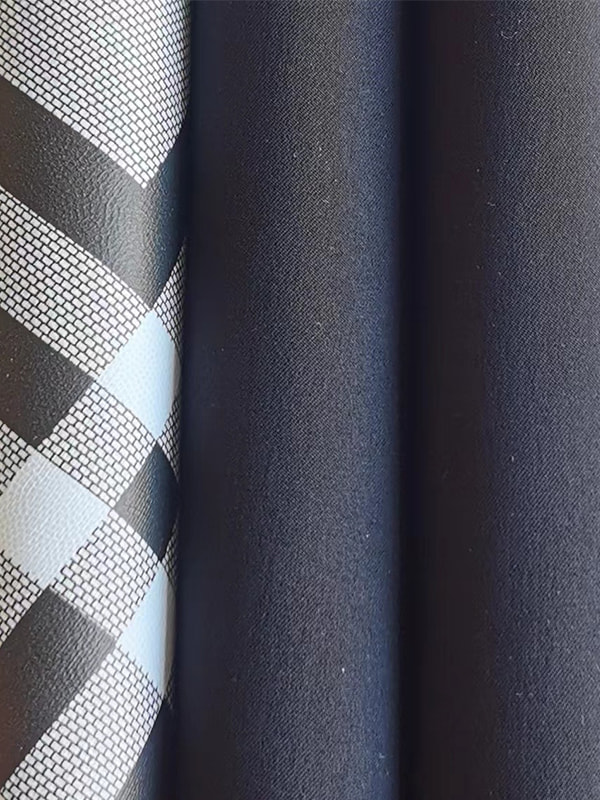
 75D Dull Grid T400 Stretch Fabric with Low-Transparency TPU LaminationDesigned for outdoor jackets, this fabric combines sun-resistant T400 stretch with a windproof and water-resistant TPU layer, offering durability and weather protection for alpine wear.View Product →
For example, the 75D dull three-dimensional grid T400 with low-transparency TPU lamination is engineered for outdoor jackets. The T400 base delivers sun-resistant stretch, while the TPU membrane adds windproofing and water resistance, an ideal combination for alpine conditions.
Chlorine Resistance: A Decisive Advantage for Aquatic and Active Wear
Chlorine attacks spandex aggressively. In swimming pools, chlorinated water reacts with the urea linkages in polyurethane, causing the fiber to break down. Spandex-based swimwear loses snap after just a few dozen swims, and white garments develop a telltale yellow tint. Heat and UV accelerate the damage, creating a combined environmental attack that shortens product life.
T400 is inherently resistant to chlorine because it contains no polyurethane. Polyester and PBT are stable in chlorinated water and resist yellowing and strength loss. Swimwear, triathlon suits, and other aquatic sportswear made with T400 keep their elasticity and color fastness after repeated exposure to pools and seawater. The same stability benefits outdoor apparel that is laundered aggressively with chlorine-based detergents or bleaching agents.
Elasticity and Recovery: T400 Maintains Shape When It Matters
Stretch quality is not about elongation alone; recovery determines whether a garment holds its shape. Spandex delivers impressive elongation, but after repeated loading its polyurethane chains slip and fatigue, especially in warm, humid conditions. T400's bicomponent structure works like a coil spring, returning to its original position with consistency. Our T400 Stretch Fabric Ultimate Guide explores these mechanisms in detail and explains why mechanical stretch outperforms elastane under sustained outdoor use.
For outdoor brands, this means jackets, pants, and shorts that resist bagging during long hikes or climbs. Knees keep their shape, waistbands continue to function, and sleeves stay in place through a full day of movement.
 150D 2/1 Twill Cationic Polyester T400 Stretch FabricThis twill fabric provides soft texture and reliable two-way stretch, resisting bagging in hiking pants and lightweight jackets ideal for long outdoor activity.View Product →
The 150D 2/1 twill cationic-polyester T400 stretch fabric is a strong example. Its twill construction and cationic yarn create a soft, textured hand, while the T400 component delivers two-way stretch with excellent recovery, ideal for outdoor trousers and lightweight jackets.
Recyclability and Sustainability: T400 Supports the Circular Economy
Outdoor brands are under increasing pressure to meet recycled-content and end-of-life recyclability targets. Spandex is a serious obstacle in textile recycling because polyurethane contaminates polyester and nylon streams, and there is still no economical way to separate elastane from blended fabrics at scale.
T400 removes this barrier. Because it is made entirely from polyester-based polymers, T400 can be recycled through conventional polyester recycling channels. Many T400 fabrics are also produced with recycled polyester yarns and carry GRS, or Global Recycled Standard, certification. For brands that want high-stretch apparel with a circular story, T400 provides a clear advantage over spandex blends.
Why Outdoor Brands Are Switching from Spandex to T400
The shift across the outdoor industry is driven by three factors:
- Extended product life: UV and chlorine resistance keep stretch and appearance intact for years, reducing replacement cycles and warranty claims.
- Design freedom: T400 fabrics can be woven on standard looms, dyed with conventional polyester dyes, and finished with PTFE or TPU laminates without losing elastic performance.
- Sustainability credentials: T400 is recyclable, available in recycled versions, and compatible with Oeko-Tex and GRS requirements that European and American retailers increasingly demand.
As demand grows, the material ecosystem around T400 continues to mature. From low-transparency TPU laminates to brushed fleece backings and air-layer structures, mills are expanding the range of T400 constructions designed specifically for outdoor apparel. Our industry analysis on T400 stretch fabric leading the new trend of clothing manufacturing shows how these developments are reshaping performance wear.
Selecting the Right T400 Fabric for Your Outdoor Collection
When choosing a T400 fabric, the intended application should guide the construction:
| Application | Recommended T400 Construction | Key Performance Features |
|---|---|---|
| Mountain jackets and shells | Dull grid T400 with low-transparency TPU 0.012 | Windproof, water-resistant, UV-stable stretch |
| Outdoor trousers | 2/1 twill cationic T400 | Abrasion resistance, textured hand, durable recovery |
| Swimwear and aquatic wear | Cationic T400 stretch-hole fabric | Chlorine-proof, quick-drying, ventilated stretch |
| Midlayer garments | Air-layer T400 with polar fleece backing | Warmth, soft touch, four-way flexibility |
 Cationic Polyester T400 Stretch-Hole Fabric for Breathable Aquatic UseWith an open-hole structure that drains water quickly, this mechanically elastic fabric delivers ventilation and stretch, keeping athletes dry during intense effort.View Product →
For aquatic and breathable applications, the cationic-polyester T400 stretch-hole fabric combines elasticity with ventilation in a way that spandex-based mesh rarely achieves. Its open-hole structure drains water quickly and keeps the athlete dry during intense effort.
FAQ: T400 vs. Spandex in Outdoor Apparel
Q1: Can T400 completely replace spandex in stretch fabrics?
In most outdoor and performance apparel, yes. T400 delivers adequate stretch with superior recovery and better environmental resistance. For ultra-high stretch garments such as compression wear, spandex blends may still be considered, but hybrid T400-spandex constructions are also appearing.
Q2: Does T400 lose elasticity after prolonged sun exposure?
No. T400's polyester-based molecular structure is inherently UV-resistant, and its elastic recovery persists much longer than spandex under direct sunlight.
Q3: Is T400 suitable for chlorinated pool swimwear?
Yes. T400 resists chlorine well and does not yellow or degrade the way spandex does. Many swimwear and aquatic sportswear producers have adopted T400 for this reason.
Q4: Is T400 more sustainable than spandex?
Generally, yes. T400 is made from polyester-based materials, can be recycled in existing polyester streams, and is available in GRS-certified recycled versions. Spandex is difficult to recycle and often contaminates recycling batches.
For outdoor apparel that faces sun, chlorine, and intensive movement, T400 clearly outperforms spandex in durability, recovery, and sustainability. Suzhou Redcolor International Trading Co., Ltd. produces a full range of T400 stretch fabrics, from low-transparency TPU laminates for mountain shells to breathable hole fabrics for aquatic sports, with development, sampling, and garment verification services to support your product journey. Contact our team to explore how a T400-based fabric strategy can extend the performance life of your outdoor line.



Kontaktujte nás pro více informací
Neváhejte kontaktovat, když nás potřebujete!

Kategorie produktu
Kontaktní informace
-
No.1 Huanhu Road (Building I) Pingwang, Wu Jiang, Suzhou, Jiangsu, Čína
-
+86-13962557213
-
+86-512-80739991-801
-
+86-512-80739990
-
